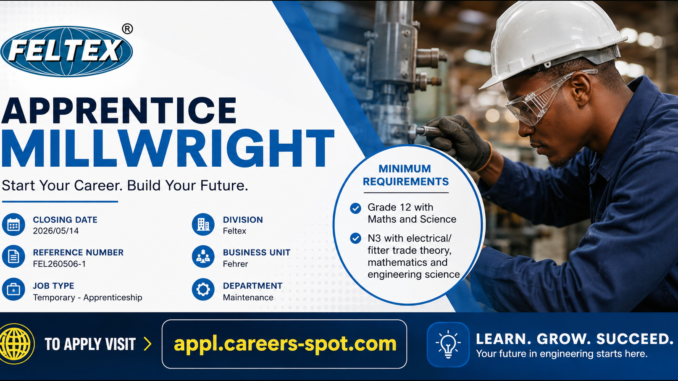
Finding an apprenticeship can be one of the best ways to start building practical skills while gaining real workplace experience. The FELTEX Apprentice Millwright opportunity gives aspiring artisans a chance to work in a technical environment where they can learn both mechanical and electrical maintenance skills.
For young South Africans who enjoy problem-solving, machinery, and hands-on work, this apprenticeship could be a valuable step toward a long-term career in manufacturing and engineering.
What Is the FELTEX Apprentice Millwright Programme?
The FELTEX Apprentice Millwright programme is designed to help candidates gain practical training in industrial maintenance and equipment repair. Apprentices work under experienced technicians and artisans while learning how production machinery operates in a factory environment.
A millwright is responsible for maintaining, repairing, installing, and troubleshooting machinery. This includes both mechanical and electrical systems. During the apprenticeship, candidates usually receive structured workplace learning combined with technical development.
This type of opportunity is especially useful for people who want to qualify as artisans and gain experience in the manufacturing sector.
What Does a Millwright Do?
Millwrights play an important role in keeping factory operations running smoothly. If production machinery stops working, it can delay manufacturing and affect the entire operation.
Typical millwright responsibilities may include:
- Repairing faulty machinery
- Performing routine maintenance
- Inspecting mechanical and electrical systems
- Installing industrial equipment
- Diagnosing machine problems
- Replacing worn-out parts
- Ensuring machinery operates safely
- Assisting with breakdowns during production
A millwright often works with motors, conveyor systems, pumps, hydraulic systems, and automated production equipment.
Who Should Apply?
This apprenticeship may suit candidates who:
- Enjoy technical and practical work
- Like working with tools and machinery
- Have an interest in engineering or manufacturing
- Want to become qualified artisans
- Are willing to learn in a fast-paced environment
- Can follow safety procedures carefully
Strong problem-solving skills and attention to detail are also useful in this field.
Minimum Requirements
The exact requirements can vary depending on the employer’s needs, but applicants for apprentice millwright positions are commonly expected to have:
- A Matric certificate or equivalent qualification
- Mathematics and Physical Science as school subjects
- Technical knowledge or engineering studies may be an advantage
- Good communication skills
- Willingness to work shifts if required
- Ability to work in a team environment
Some employers may also consider candidates who have completed relevant N-courses such as N2, N3, or engineering-related studies.
Before applying, always check the official job advertisement for the latest requirements and application details.
Skills That Can Help You Succeed
Apprenticeships are learning opportunities, so employers do not expect candidates to know everything already. However, certain personal qualities can help applicants perform well during training.
Useful skills include:
Technical Interest
Candidates who enjoy understanding how machines work often adapt well to millwright training.
Problem-Solving Ability
Machinery breakdowns require careful troubleshooting and logical thinking.
Teamwork
Millwrights usually work alongside maintenance teams, operators, and supervisors.
Time Management
Factory maintenance often works on schedules and deadlines, especially during production periods.
Safety Awareness
Industrial environments require strict attention to safety procedures and protective equipment.
What You Can Learn During the Apprenticeship
An apprenticeship is not only about earning workplace experience. It is also a chance to build technical knowledge that can support future career growth.
Depending on the programme structure, apprentices may learn:
- Mechanical fitting
- Electrical maintenance
- Welding basics
- Hydraulic and pneumatic systems
- Preventive maintenance procedures
- Reading technical drawings
- Fault finding and diagnostics
- Industrial safety standards
These skills can become valuable across different industries such as automotive manufacturing, mining, logistics, and heavy engineering.
Why Apprenticeships Matter in South Africa
Many South Africans struggle to gain work experience after finishing school or technical studies. Apprenticeships help bridge the gap between education and employment by giving candidates practical workplace exposure.
For technical careers, hands-on experience is extremely important. Employers often prefer candidates who understand real production environments and industrial equipment.
Apprenticeships can also create pathways toward artisan qualification, which remains an important and respected career route in South Africa.
Qualified artisans are needed in sectors including:
- Manufacturing
- Automotive production
- Construction
- Energy
- Mining
- Transportation
Tips Before Applying
Before submitting your application, it helps to prepare properly.
Update Your CV
Make sure your CV includes:
- Your education details
- Technical subjects completed
- Contact information
- Any practical training or workshop experience
- Computer skills if applicable
Keep the document clear and easy to read.
Prepare Supporting Documents
Applicants are often asked to provide:
- Certified copy of ID
- Certified Matric certificate
- Academic records
- Updated CV
Ensure scanned documents are readable before uploading.
Read the Job Post Carefully
Always check the official advert for:
- Closing dates
- Required qualifications
- Application instructions
- Location details
Avoid submitting incomplete applications.
What Employers Often Look For
When companies recruit apprentices, they usually focus on attitude and learning potential rather than years of experience.
Employers may look for candidates who:
- Show willingness to learn
- Follow instructions carefully
- Demonstrate reliability
- Arrive on time
- Maintain professional behaviour
- Take safety seriously
A positive work ethic can make a strong impression during an apprenticeship.
Career Opportunities After Completing an Apprenticeship
Completing a millwright apprenticeship can open doors to different technical career opportunities. While employment is never guaranteed, trained artisans are often valued in industrial sectors.
Possible future roles may include:
- Qualified Millwright
- Maintenance Technician
- Engineering Assistant
- Production Maintenance Artisan
- Plant Maintenance Technician
With additional experience and training, some artisans later move into supervisory or specialist technical roles.
Working Environment
Millwright apprentices usually work in industrial or manufacturing facilities. The environment may involve:
- Factory floors
- Mechanical workshops
- Production plants
- Maintenance departments
The work can sometimes be physically demanding and may involve standing for long periods, lifting equipment, or responding to machine breakdowns during busy production times.
Personal protective equipment such as safety boots, gloves, helmets, and overalls is commonly required.
How to Apply for the FELTEX Apprentice Millwright Opportunity
Candidates who meet the requirements can apply online through the official application portal.
Application link:
Apply for the FELTEX Apprentice Millwright Opportunity
Before submitting your application, double-check that all information is correct and that your supporting documents are attached.
Final Thoughts
The FELTEX Apprentice Millwright opportunity can be a strong starting point for individuals interested in technical careers and industrial maintenance. Apprenticeships provide more than workplace exposure — they help candidates develop practical skills that can support future employment opportunities in South Africa’s manufacturing and engineering industries.
For applicants who enjoy hands-on learning, machinery, and technical problem-solving, this type of programme can offer valuable experience and long-term career potential.
Leave a Reply