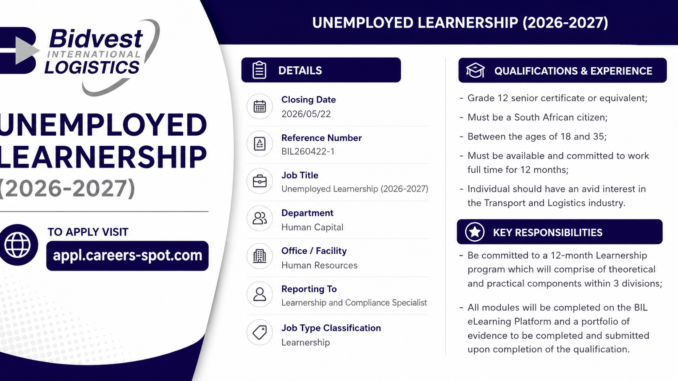
If you’ve recently completed matric and are struggling to find work, a learnership can be a practical way to gain experience while earning a stipend. The Bidvest International Logistics Unemployed Learnership is one such opportunity that combines structured learning with workplace exposure in the logistics industry.
This guide breaks down what the programme offers, who can apply, and how to submit a strong application.
What is the Bidvest International Logistics Unemployed Learnership?
This learnership is designed for unemployed South Africans who want to build a career in logistics, supply chain, or freight services. It gives you both:
- Classroom-based learning (theory)
- Workplace training (practical experience)
By the end of the programme, you gain a recognized qualification and real work experience—two things that significantly improve your chances of employment.
Why consider a learnership in logistics?
Logistics is a growing field in South Africa, supporting industries like retail, manufacturing, and international trade. Skills in this area are in demand because companies rely on efficient transport, warehousing, and distribution systems.
A learnership like this helps you:
- Understand how goods move locally and internationally
- Learn basic supply chain processes
- Develop workplace skills (communication, teamwork, problem-solving)
- Build a CV with real experience
For many learners, this becomes a stepping stone to permanent employment.
Who should apply?
This programme is best suited for individuals who:
- Recently completed Grade 12 (Matric)
- Are currently unemployed
- Want to enter the logistics or business sector
- Are willing to learn and work in a structured environment
You don’t need prior work experience, which makes it ideal for first-time job seekers.
Minimum requirements
While requirements can vary slightly, most applicants should meet the following:
- South African citizen
- Matric certificate (Grade 12)
- Basic understanding of English (reading and writing)
- Good communication skills
- Willingness to commit to the full duration of the learnership
Having subjects like Mathematics or Business Studies can be helpful, but they are not always mandatory.
What you will learn
During the programme, you’ll be exposed to key areas of logistics, such as:
1. Supply chain basics
You’ll learn how goods move from suppliers to customers, including storage and distribution.
2. Freight and transport operations
Understanding how shipments are managed, tracked, and delivered.
3. Workplace systems
Exposure to real business tools, processes, and reporting systems.
4. Customer service
Handling client requests, queries, and communication professionally.
5. Teamwork and professionalism
Building habits that employers expect in a working environment.
Benefits of the learnership
This is not just training—it comes with real advantages:
Monthly stipend
You receive a stipend to help cover basic living expenses during the programme.
Work experience
You gain hands-on experience, which many employers require.
Recognized qualification
You complete the programme with a formal qualification in logistics or a related field.
Better job prospects
Many learners go on to secure permanent roles or further opportunities in the industry.
What employers look for in applicants
Even without experience, your attitude matters a lot. Companies typically look for:
- Reliability (showing up on time and consistently)
- Willingness to learn
- Basic computer literacy
- Good communication skills
- Professional behaviour
If you can demonstrate these in your application, you already stand out.
How to apply
Follow these steps carefully to submit your application:
Step 1: Prepare your documents
Make sure you have:
- Updated CV
- Certified copy of your ID
- Certified copy of your Matric certificate
Step 2: Check your CV
Keep it simple and clear:
- Personal details
- Education
- Skills (e.g., communication, teamwork, computer skills)
- Any volunteer or informal experience
Step 3: Apply online
Submit your application using the official link:
👉 https://bidvestil.erecruit.co/candidateapp/Jobs/View/BIL260422-1
Step 4: Double-check before submitting
Ensure:
- All information is correct
- Documents are attached
- Contact details are accurate
Tips to improve your chances
A lot of people apply for learnerships, so small details can make a difference.
Keep your CV clean and readable
Avoid long paragraphs. Use bullet points.
Use a professional email address
Avoid nicknames or informal names.
Be honest
Don’t add skills or experience you don’t have.
Prepare for possible interviews
If shortlisted, you may be asked basic questions like:
- Why do you want to join the programme?
- What do you know about logistics?
- What are your strengths?
Think about your answers in advance.
Common mistakes to avoid
Many applications are rejected for simple reasons:
- Missing documents
- Incorrect contact details
- Unclear or messy CV
- Applying without meeting basic requirements
Taking a few extra minutes to review your application can prevent these issues.
What happens after you apply?
After submission:
- Applications are reviewed
- Shortlisted candidates may be contacted
- Interviews or assessments may be conducted
- Successful candidates are selected
Response times vary, so be patient and keep checking your phone and email.
Is this learnership worth it?
If you’re unemployed and looking for a structured way into the job market, this learnership is a strong option.
It gives you:
- Practical experience
- A recognized qualification
- Exposure to a growing industry
Even if it doesn’t lead directly to a permanent job, the experience you gain can open other doors.
Final thoughts
Starting your career can feel difficult, especially without experience. Programmes like the Bidvest International Logistics Unemployed Learnership are designed to bridge that gap.
Focus on submitting a complete, honest, and well-prepared application. Even if you don’t succeed the first time, each application teaches you something valuable for the next opportunity.
If you’re serious about building a future in logistics or business, this is a practical place to start.
Leave a Reply